Research
PGMs for Penetrative Political Control: the Underlying Logic of State-PGM Collaborations
Devin P. Brown
What motivates states to collaborate with pro-government militias (PGMs)? Existing research has outlined primarily violent motivations for states that collaborate with PGMs, however, global data on PGMs finds that only 60% of PGMs are reported having committed violence. I propose an underlying logic for state-PGM collaborations based on the states desire for penetrative political control—the ability to shape the local distribution of political power in areas that have lacked previously lacked state authority. PGMs give states the local information they need to selectively reward and punish citizens, extending the state’s influence over local institutions. I support this theory with both time-series, cross-sectional models of PGM usage in a global sample and with a subnational case study of Turkey and the Village Guard. The findings have implications for understanding state capacity development and the growth of hybrid security orders.
Project is undergoing final revisions before submission.

Pro-government Militias, Plausible Deniability, and Public Opinion:
Testing the Microfoundations
Devin P. Brown
Existing work in political science has argued that states use pro-government militias in order to achieve plausible deniability. When states fear international punishment but are intent on abusing their citizenry, they delegate unsavory violence to sub-state militias in order to create uncertainty about the government’s involvement and ultimately to avoid international punishment. This project examines the micro-processes underlying plausible deniability. Do observers assign less blame to governments that delegate violence to militias instead of using the military? Does this delegation make denials of involvement more plausible? Does delegating violence lead observers to express more support (oppose punishments) for that government?
To answer these questions, I propose a 4×1 survey experiment in which individuals assess government blame across four different violence delegation scenarios followed by a general denial of involvement. I ask respondents to evaluate various dimensions of government blame for the violence, to assess the plausibility of the government’s denial of involvement, and to indicate their preferred international response to the violence. Each of these outcomes reflects the extent to which delegating violence to militias buys states plausible deniability and enables them to avoid being held accountable for violence. This project aims to uncover the micro-foundations of an established theory in international relations. Future work should consider different contexts and the relative persuasiveness of other attempts at avoiding blame
New survey design is being finalized before IRB approval, OSF pre-registration, and data collection. I have collected data for a previous design and preliminary results were promising; however, the old design featured various flaws, motivating a complete rework.
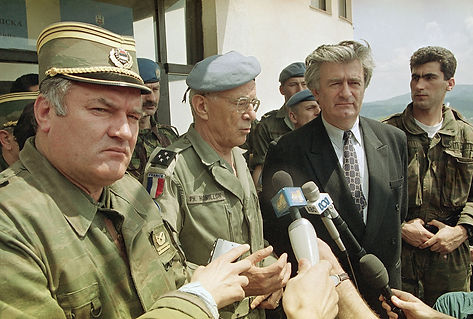
Strongmen in Need of Help: Personalist Regimes, Small Militaries, and Peacekeeping Acceptance
Devin P. Brown and Hyeran Jo
Who accepts international actors to deal with domestic security problems? Using the framework of sovereignty costs and security benefits, we argue that personalist dictatorships are more likely to accept a UN peacekeeping operation than other regime types. In terms of security benefits, personalist leaders gain by having internal stability provided by peacekeeping. These regimes often face a unique threat environment that drives them to seek outside options to aid with their domestic security. At the same time, personalists experience relatively fewer sovereignty costs than other regimes. Since personalists must appease fewer domestic constituencies, they are more easily able to cede some decision-making autonomy to international peacekeepers. We find support for our arguments by utilizing regime classifications (Geddes, Wright, and Frantz 2014) and data on United Nations peacekeeping from 1990 to 2010. The result has implications for the likely success of a peacekeeping operation and the erosion of the multilaterally enforced liberal international order.
Project is currently under review.
